

Teaching Kids About Money: Practical Financial Education for Families
Helping kids understand money gives them a real head start. As children grow, simple, clear money lessons help them make smarter choices, steer clear of avoidable debt, and start building the habit of saving. This article covers the core money-management skills to teach, when to begin, how allowances can build saving habits, and how budgeting supports financial independence—practical steps parents can use to prepare kids for real financial decisions.
Core Money Skills Every Child Should Learn
Teaching money management means focusing on a few lasting lessons. Start with the difference between wants and needs so kids learn to prioritize spending. Add simple saving and basic budgeting early on to build steady habits. These fundamentals set the stage for future responsibility and give children confidence handling money as they grow.
Teaching Wants vs. Needs

Use everyday moments to explain wants and needs. A need covers essentials like food, clothing, and shelter; a want is something extra, like a toy or game. Turn it into an activity—ask your child to sort items in the cart or on a list. Making the lesson interactive helps it stick and gives kids language to talk about money choices.
Why Start Saving and Budgeting Early
Introducing saving and simple budgets when kids are young pays off later. Children who learn to set aside money for goals and track spending are more likely to keep those habits as adults. Early practice with saving teaches planning and helps kids see the payoff of delayed rewards—skills that matter long-term.
When to Start Teaching Money Skills
There’s no single “right” age, but earlier is better. Preschool activities can introduce basic ideas that grow into more complex lessons over time. As children develop, you can layer in new concepts that match their understanding and daily responsibilities.
Money Lessons for Toddlers & Preschoolers
For the youngest kids, keep it playful. Play money helps with counting and coin recognition. A pretend store or simple games teach that money is exchanged for goods. These early, hands-on experiences make abstract ideas concrete and set up later learning.
Money Lessons for Elementary-Age Kids and Teens
School-age kids are ready for more structure: show them how to track small incomes and expenses, and encourage saving for a specific item—like a bike or game. Teenagers can handle budgeting for part-time job pay and bigger goals like a car or college. Practicing these skills before young adulthood reduces costly mistakes later on.
How Allowances Teach Saving and Responsibility
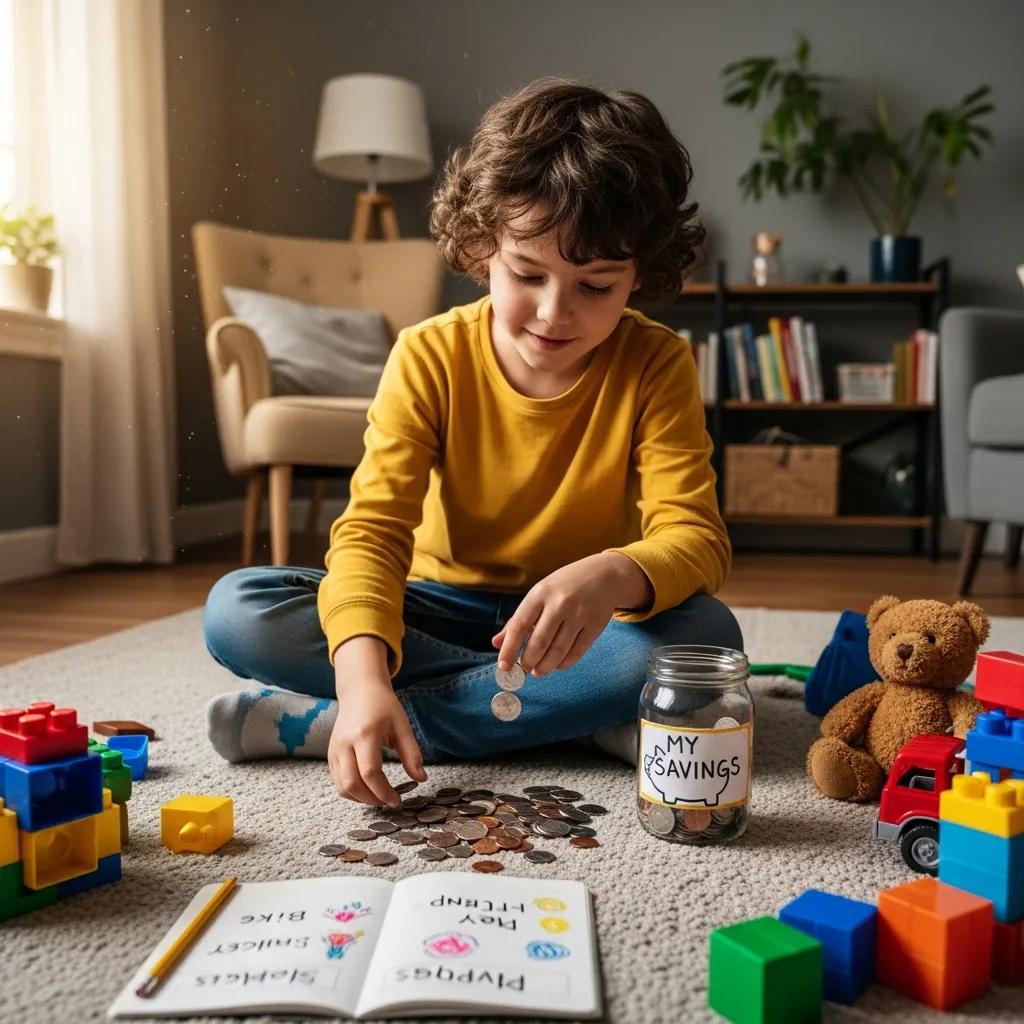
An allowance gives kids a safe way to practice saving, spending, and budgeting. Regular pocket money creates low-stakes lessons about choices and consequences, and different allowance approaches let families pick what fits their values and learning goals.
Allowance Systems That Teach Earning and Responsibility
There are a few common allowance systems to consider. Tying pay to chores teaches that money is earned through effort. A fixed allowance simplifies planning and lets a child practice budgeting. Choosing the right method comes down to the lesson you want your child to learn.
Using Allowances to Teach Delayed Gratification
Allowances are a great tool for delayed gratification. Encourage kids to save part of their allowance for larger purchases so they learn patience and planning. Saving toward a special toy or an outing offers a concrete lesson in waiting for what matters most.
Research also highlights how important the ability to wait can be for long-term outcomes.
Delayed Gratification: Key to Children’s Financial Success
The inability to delay of gratification is frequently offered as a behavioral marker of “impulsivity” or the lack of “willpower.” Longitudinal follow-ups that now span nearly 40 years show patterns of direct relations indicative of more adaptive functioning over the life course by those children who waited during preschool. These findings suggest that children’s ability to wait as preschoolers derives in large part from deliberate strategies deployed by children to deal with the challenge they face.
Delay of gratification: Explorations of how and why children wait and its linkages to outcomes over the life course, 2017
How Budgeting Builds Financial Independence
Budgeting teaches planning and control—key steps toward financial independence. When kids learn to build a simple plan and stick to it, they gain the habits needed to manage larger expenses later, like college costs or living on their own.
Teach Budgeting with Tools Like CalendarBudget for Families
Tools such as CalendarBudget make budgeting concrete for families. Seeing projected balances on a calendar helps everyone plan for upcoming bills and goals. Using a visual tool turns abstract math into clear decisions parents and kids can work on together.
Practical Money Tips for Teens
Teens benefit from real responsibilities: encourage them to set goals, track what they earn and spend, and separate needs from wants. Managing part-time pay, saving for longer-term goals, and reviewing progress regularly builds the habits that lead to independent money management.
The table below compares allowance approaches and what each one teaches, so you can pick the best fit for your family.
Teaching kids about money is an investment that pays off. Start with simple, age-appropriate steps, use practical tools, and make lessons hands-on. With a little guidance at each stage, children can grow into financially capable adults who make thoughtful, confident choices.







Leave A Comment