Table of Contents
Getting Started
Hook Categories
1. Every Purchase Feels Like A Gamble
2. Money Problems Keep Sneaking Up On Me
3. I Can’t Stop Worrying About Money
4. Will My Money Last Until Payday
5. I Keep Spending Money I Know I’m Going To Need Later
6. I’m Doing Everything Right. Why Am I Still Broke?
7. Wait! Where Did All My Money Go?
8. I Can’t Rely On My Bank Balance To Make Decisions
Intro
Every piece of successful content starts with a hook.
A hook is the headline, opening sentence, first few seconds of a video, email subject line, social post opener, or attention-grabbing statement that makes someone stop scrolling and pay attention.
Without a strong hook, even great content often goes unseen.
With a strong hook, people lean in because they immediately recognize themselves, their situation, or a problem they’re actively trying to solve.
The best hooks don’t feel like marketing. They feel like thoughts your audience is already having.
As Russell Brunson said:
“If you can describe your ideal customer’s problem better than they can, they will automatically assume you have the solution.”
The goal isn’t manipulation—it’s connection. When people feel understood, they pay attention.
These hooks tap into the financial frustrations your audience faces daily:
-
- “I don’t need another money tip. I need to know why nothing I’ve tried is working.”
- “I thought I had breathing room financially. Turns out I was just between expenses.”
- “I’ve been fighting these money problems for so long. Is this my life now?”
These aren’t marketing concepts; they are real thoughts. Use these hooks to meet your audience exactly where they are. Turn their daily financial frustrations into content that builds trust and leads naturally to your solution.
Use these for:
-
- Educational insights & breakthroughs
- Transformation stories & lessons
- Money mistakes & realizations
- Personal stories & POV content
The strongest hooks don’t force attention—they earn it by making people feel understood.
Getting Started
The following categories are organized around the most common financial frustrations, emotions, and experiences people face when managing money.
How To Use These Hooks
- Choose the category that best fits your content.
- Select a hook that connects with your audience.
- Use the Content Blueprint section to build your content naturally around the situation, assumption, reality check, breakthrough, and new reality. Included is how to present CalendarBudget in 10 seconds as the solution that meets your audience’s needs.
- Adapt the wording to your voice and audience.
- Finish with a Call to Action (CTA) that encourages your audience to explore CalendarBudget. Use the suggested CTAs or create one that feels natural for your content.
Hook Categories
1. Every Purchase Feels Like A Gamble
Core Emotion
 I feel anxious every time I spend money because I never feel completely sure whether I’m making the right decision. Too many times, I’ve been ready to buy something, trying to predict whether I could afford it, only to spend the money and immediately worry that I just created a money problem for myself later.
Why These Hooks Work
Spending money often feels riskier than it should. You see the money sitting in your account, and the purchase seems reasonable, but that doesn’t guarantee it’s actually affordable. Too many times you’ve made a purchase thinking you were fine, only to find yourself wishing you still had the money later. These hooks mirror your audience’s internal conflict, building immediate trust by validating their hesitation and sense of risk with every purchase.
Content Blueprint
Situation: Start with a purchase, checkout moment, or spending decision that should feel simple.
↓
Assumption: Show how you believed that having the money in your account now meant you could afford the purchase.
↓
Reality Check: Reveal how purchases that seemed harmless at first often created stress later when expenses or other financial obligations needed that money more.
↓
Breakthrough: Realize that having enough money to make the purchase isn’t the same as being able to afford it. The missing piece is knowing what that money may need to pay for later before more money arrives.
↓
New Reality: Introduce CalendarBudget as a practical way to see your future account balances based on your past spending patterns, so you know what’s safe to spend before making a purchase and can make spending decisions with confidence, rather than constantly second-guessing.
↓
CalendarBudget In 10 Seconds: CalendarBudget shows how today’s purchase will affect your future balances before you spend the money, so you know what’s actually safe to spend instead of constantly second-guessing yourself.
↓
CTA’s:
-
- Find out if you can actually afford it before you buy it.
- Take the guesswork out of spending.
- See what today’s purchase does to next week’s money.
Top 10 Hooks
- I have enough money to buy this today. It’s next week that I’m worried about.
- I shouldn’t have to think this hard about spending $20.
- Every purchase feels like I’m using up money meant for something I’ll need more later.
- Buying groceries shouldn’t feel like gambling with next week.
- I can make the purchase. The money’s there. I worry if that money is needed for something else.
- Didn’t even leave the store yet. My purchase already feels like a mistake.
- I can never enjoy my purchase. I’m too worried it’s going to mess things up later.
- Why does spending money feel risky when it looks like the money’s right there?
- I shouldn’t have to guess if I can actually afford the purchase.
- I never know if my purchase is affordable or just affordable today.
2. Money Problems Keep Sneaking Up On Me
Core Emotion
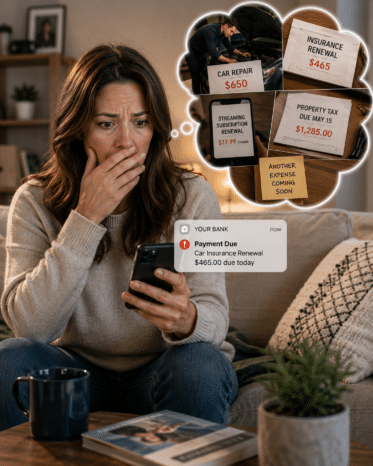 I feel overwhelmed and defeated because every time I think I’m finally getting ahead financially, another setback knocks me right back into the same money struggles. No matter how hard I try, I can’t seem to break the cycle.
Why These Hooks Work
The hardest part of struggling financially isn’t the unexpected expenses themselves. It’s the sinking feeling that no matter how hard you try, you don’t seem to stay ahead for long. After enough setbacks, even good weeks don’t feel safe because you’ve learned how quickly things can change. These hooks connect with the discouragement, uncertainty, and emotional exhaustion that come from never feeling truly in the clear.
Content Blueprint
Situation: Start with the feeling that you’re finally getting ahead financially. Your account looks okay, you’ve caught up on bills, and for the first time in a while, it feels like you can finally relax.
↓
Assumption: Show how you believed this time was different. You finally felt like you had enough breathing room and that the cycle of constantly struggling with money might actually be behind you.
↓
Reality Check: Reveal how one forgotten expense, overlooked bill, renewal, or financial obligation was all it took to erase that progress. Suddenly, you were right back to stressing over money, wondering how things had fallen apart so quickly.
↓
Breakthrough: Realize the problem wasn’t that life kept throwing more expenses at you. The problem was that you couldn’t see your financial obligations early enough to prepare for them.
↓
New Reality: Introduce CalendarBudget as a practical way to see upcoming expenses and financial obligations before they catch you off guard, so you can be prepared financially before they arrive, rather than constantly recovering from the next surprise.
↓
CalendarBudget In 10 Seconds: CalendarBudget maps out your upcoming income, bills, and expenses on a calendar, so you can spot potential financial problems weeks before they become expensive surprises.
↓
CTA’s:
-
- Stop getting blindsided by your own finances.
- See financial problems before they become financial emergencies.
- Give yourself time to solve money problems before they happen.
Top 10 Hooks
- I never know if I’m financially okay or just between problems.
- I’m not sure if I’m finally getting ahead or about to get blindsided again.
- I thought I finally had breathing room. Then another expense hits.
- Every time I think I’m caught up financially, something else shows up.
- Every time I relax about money, a surprise expense reminds me not to.
- I keep getting surprised by expenses I should have seen coming.
- The expenses I don’t think about are the ones that keep knocking me off track.
- I hope next week’s expenses are covered. I’ve been wrong before.
- I can’t afford another expense catching me off guard.
- There’s always one more expense I didn’t see coming.
3. I Can’t Stop Worrying About Money
Core Emotion
 I feel mentally exhausted because no matter what I’m doing, I can’t stop worrying about money. It’s always there in the background, making me wonder if everything’s covered or if I’ve forgotten something important. I never feel like I can fully relax.
Why These Hooks Work
Money stress isn’t just something you deal with when you’re managing your finances. It follows you into your work, your relationships, your evenings, and even your sleep. These hooks connect with the mental exhaustion of always carrying money worries in the back of your mind, making it difficult to ever feel completely at peace.
Content Blueprint
Situation: Start with a moment when you’re trying to work, enjoy life, spend time with family, or fall asleep, but money keeps intruding on your thoughts.
↓
Assumption: Show how you believed constantly thinking about your finances was the only way to stay on top of expenses, spending decisions, and everything else competing for your money.
↓
Reality Check: Reveal how carrying your finances around in your head left you constantly distracted and emotionally drained. Instead of being fully present with your work, your family, your hobbies, or even your own thoughts, part of your attention was always occupied by money.
↓
Breakthrough: Realize that the answer wasn’t to think about your money more. It was to stop relying on your memory to manage your money.
↓
New Reality: Introduce CalendarBudget as a practical way to organize your upcoming income, expenses, and financial obligations in one place, so you can trust that your finances are under control, and finally enjoy life without money constantly demanding your attention.
↓
CalendarBudget In 10 Seconds: CalendarBudget maps out your upcoming income, expenses, and future balances on a calendar, so you always know whether everything’s covered before it happens.
↓
CTA’s:
-
- Spend less time worrying about money and more time living in the moment.
- See why thousands of people finally stopped stressing about money.
- Know everything’s covered without constantly checking.
Top 10 Hooks
- Even when I’m not thinking about money, part of me is still worried I’m forgetting something.
- I wish I could stop thinking and worrying about money for just one day.
- Even when the bills are paid, my brain is already worried about the next ones.
- No matter what I’m doing, part of my brain is still thinking about money.
- I can’t relax because part of me is always trying to stay ahead financially.
- I’m exhausted from trying to stay one step ahead financially.
- I’m constantly trying to remember what my money still needs to cover.
- I’m constantly doing money math in my head to avoid being caught off guard.
- I can’t shake the feeling that I’ve forgotten a bill or other important expense.
- I’m always waiting for the next money problem to show up.
4. Will My Money Last Until Payday
Core Emotion
 I feel like I’m constantly trying to make it to my next payday. I’m never sure whether what I have today will last until more money comes in. Every week feels like a balancing act, hoping nothing else comes up.
Why These Hooks Work
Waiting for payday can feel like watching a countdown. Every extra day your money has to last is another day you hope nothing unexpected happens before payday arrives. These hooks connect with the pressure, uncertainty, and mental effort of trying to make today’s money cover tomorrow’s responsibilities.
Content Blueprint
Situation: Start with the balancing act of trying to make one paycheck cover everything it needs to before the next one arrives. Bills seem to all come due at the same time. Can’t get a break from everyday expenses either, and it feels like you’re constantly trying to make one paycheck do the work of two.
↓
Assumption: Show how you believed that if you were careful enough with your spending, you’d somehow make your money last until your next payday.
↓
Reality Check: Reveal how managing your money became a constant balancing act. Paying for one expense often meant delaying another, putting off a purchase, or hoping nothing else came up before your next paycheck. Every financial decision led to another, leaving you feeling like you were constantly rearranging your money to keep everything from falling apart.
↓
Breakthrough: Realize the problem wasn’t a single paycheck or expense. The problem was constantly reacting to whatever needed your money next, rather than having a plan that showed how everything would fit together ahead of time.
↓
New Reality: Introduce CalendarBudget as a practical way to map out your income, expenses, and future balances on a calendar, so you can see how everything fits together before it happens, stop constantly rearranging your finances, and finally feel confident that everything will work out.
↓
CalendarBudget In 10 Seconds: CalendarBudget helps you plan how every paycheck will be used over the coming weeks, so getting to payday no longer feels like a guessing game.
↓
CTA’s:
-
- Know exactly how long your money will last.
- Stop wondering if you’ll make it to payday.
- Turn payday into a plan, not a finish line.
Top 10 Hooks
- I can afford it. I can’t afford it today.
- If payday came a few days earlier, this wouldn’t even be a problem.
- The money eventually shows up. The expenses show up first.
- The problem isn’t the amount of money. It’s when I need it.
- I feel like I’m constantly borrowing from the next payday to survive this one.
- The money is coming. The expenses will arrive first.
- Everything gets easier after payday. Getting there is the hard part.
- My biggest money problem isn’t how much I make. It’s when I need it.
- I can make the money work out by the end of the month, just not when I need it.
- I spend more time juggling when to pay for expenses than actually paying them.
5. I Keep Spending Money I Know I’m Going To Need Later
Core Emotion

I feel frustrated with myself because I keep spending money I know I’ll need later. At that moment, I convinced myself it would work out somehow, even though, deep down, I knew I shouldn’t spend the money. Later, I’m left wishing I had listened to my own instincts.
Why These Hooks Work
The most frustrating money mistakes aren’t surprises. They’re the ones you saw coming, ignored anyway, and ended up paying for later. These hooks connect with the regret of talking yourself into a decision your instincts were already trying to talk you out of.
Content Blueprint
Situation: Start with a purchase, spending decision, or temptation you knew you probably should have delayed, avoided, or thought harder about.
↓
Assumption: Show how you convinced yourself it would be okay, that you’d figure it out later, or that the consequences wouldn’t be as bad as you feared.
↓
Reality Check: Reveal how the money was later needed for something more important, turning a purchase that felt right in the moment into one you wished you could take back.
↓
Breakthrough: Realize that the purchases you regret most aren’t necessarily the most expensive ones. They’re the ones where you knew better and later wished you still had the money.
↓
New Reality: Introduce CalendarBudget as a practical way to see upcoming expenses, money goals, and financial obligations before you spend, so you can make money decisions with confidence rather than constantly wondering if you’ll regret them later.
↓
CalendarBudget In 10 Seconds: CalendarBudget shows what your money still needs to pay for before you spend it, making it easier to avoid purchases you’ll regret later.
↓
CTA’s:
-
- Stop making purchases you’ll regret next week.
- Spend with confidence instead of regret.
- Make purchase decisions you’ll still feel good about tomorrow.
Top 10 Hooks
- I knew I shouldn’t spend the money. I didn’t want to hear “no” one more time.
- I keep borrowing from tomorrow’s expenses to pay for today’s wants.
- Why do I keep making purchases that future me has to clean up?
- I spend money like my future expenses don’t exist.
- I keep thinking my next paycheck will fix today’s spending.
- I keep calling it “treating myself” when I know I can’t afford the consequences.
- ‘I’ll figure it out later’ isn’t much of a money plan.
- Why did I choose takeout all month instead of getting my bills caught up?
- Why did I choose another Amazon order over paying off my credit card?
- I want to treat my family, even though the money has other things to cover.
- It’s only $5 or $10. Just ten times a week.
6. I’m Doing Everything Right. Why Am I Still Broke?
Core Emotion
 I feel defeated because it seems like no matter what money advice I follow, nothing ever changes. I keep putting in the effort, but I still feel like I’m fighting the same financial battles over and over again.
Why These Hooks Work
There’s nothing more discouraging than trying everything people tell you to do with your money and still feeling like you’re getting nowhere. You budget. You cut back. You try to make smarter decisions. Somehow you’re still dealing with the same financial stress. These hooks connect with the discouragement and self-doubt that come from constantly putting in effort without seeing the progress you expected.
Content Blueprint
Situation: Start with trying yet another money tip, budgeting method, or piece of financial advice, convinced that this one will finally be the thing that changes everything.
↓
Assumption: Show how you believed that if you just found the right budgeting system, followed the advice closely enough, and stayed disciplined, you’d finally start getting ahead financially.
↓
Reality Check: Reveal how every new strategy gave you hope for a while, but somehow you always ended up dealing with the same money problems. Instead of feeling like you were getting ahead, it felt like you were putting in more effort to stay in the same place.
↓
Breakthrough: Realize the problem wasn’t that you weren’t trying hard enough or that you were following the wrong advice. The problem was that none of those strategies showed you how today’s money decisions affected tomorrow’s finances or what your money needed to do next.
↓
New Reality: Introduce CalendarBudget as a practical way to see how your income, expenses, and future balances fit together, so every financial decision finally moves you closer to getting ahead rather than keeping you stuck in the same cycle.
↓
CalendarBudget In 10 Seconds: CalendarBudget gives you the complete financial picture that traditional budgeting methods often miss, showing exactly how each purchase affects your future balances.
↓
CTA’s:
-
- See the piece every other budgeting app leaves out.
- Finally understand why nothing else worked.
- Stop working harder. Start seeing your finances clearly.
Top 10 Hooks
- I’m doing everything I can to get ahead. Why does it still feel like I’m losing?
- I don’t need another money tip. I need to know why nothing I’ve tried is working.
- I’ve been fighting these money problems for so long. Is this my life now?
- I’ve spent years doing everything I can to get ahead. But I have nothing to show for it.
- I keep making financial sacrifices. Why does it still feel like I’m falling behind?
- I’ve done everything I was told would help me get ahead financially. Why does it still feel like I’m barely scraping by?
- How am I still struggling financially after everything I’ve tried?
- I follow all the financial advice. Why am I still living paycheck-to-paycheck?
- I’ve tried budgeting more times than I can count. Why am I still living paycheck to paycheck?
- At what point does all this hard work finally start paying off financially?
7. Wait! Where Did All My Money Go?
Core Emotion
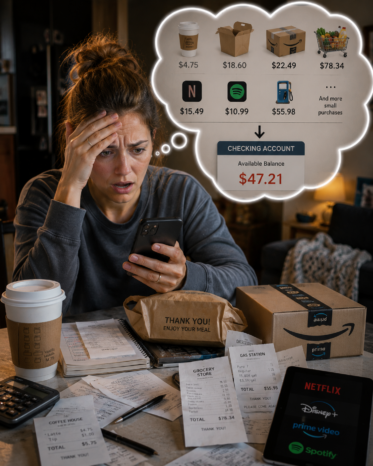 I feel caught off guard because every time I check my account, I expect there to be more money than there is. Somehow it’s always lower than I thought, leaving me wondering where it all went.
Why These Hooks Work
Few things are more discouraging than checking your account and realizing there’s far less money left than you expected. You replay your recent spending, wondering where it all went and how it disappeared so quickly. These hooks connect with the surprise, confusion, and frustration of feeling like your money never lasts as long as you thought it would.
Content Blueprint
Situation: Start with checking your bank account, fully expecting there to be more money left than there actually is. You haven’t made any huge purchases, yet somehow your balance is far lower than you imagined.
↓
Assumption: Show how you believed your spending had been reasonable. You weren’t buying expensive things, wasting money, or living recklessly, so you assumed your bank balance would be much higher than it actually was.
↓
Reality Check: Reveal how all the small purchases, everyday expenses, subscriptions, and other little things quietly added up. Instead of one obvious mistake, it was dozens of ordinary spending decisions that slowly drained your money before you even realized it.
↓
Breakthrough: Realize the problem isn’t that your money is disappearing. The problem is that you’ve never been able to see how all your everyday spending affects your future balances before the money is gone.
↓
New Reality: Introduce CalendarBudget as a practical way to see how your everyday spending affects your future balances, so you always know where your money is going and what it still needs to do before you get there.
↓
CalendarBudget In 10 Seconds: CalendarBudget shows how today’s small purchases affect tomorrow’s balances, so you can see where your money is heading before you wonder where it went.
↓
CTA’s:
-
- Never be surprised by your account balance again.
- Watch how today’s spending changes tomorrow’s balance.
- Stop wondering where all your money went.
Top 10 Hooks
- There should be more money left than this.
- Every month, I think I’ll have money left over. Every month I’m wrong.
- I thought I had breathing room financially. Turns out I was just between expenses.
- The math in my head and the money in my account never seem to match.
- The worst part is realizing the money was gone long before I noticed it.
- How did I spend that much money already?
- How did I go from feeling okay to feeling broke this quickly?
- I genuinely thought there’d be more money left than this.
- I keep overestimating how far my money will stretch.
- I don’t feel like I spent that much. But apparently I did.
8. I Can’t Rely On My Bank Balance To Make Decisions
Core Emotion
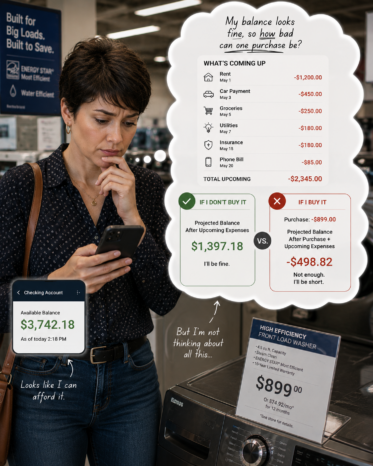 I feel anxious and insecure about my money because my bank balance sets me up to fail. I see available funds, spend them, and then get blindsided by an upcoming expense I forgot was coming. It’s a recurring cycle of money problems that leaves me constantly questioning if I can actually afford my life.
Why These Hooks Work
Relying on a bank balance is a trap—it shows you today’s truth while hiding tomorrow’s bills. These hooks work because they articulate the silent, recurring panic your audience feels when trusting a misleading number. By nailing down the insecurity they can’t quite put into words, you instantly validate their reality. When you speak their struggle back to them this clearly, you stop the scroll and immediately position yourself as the partner who finally understands their path forward.
Content Blueprint
Situation: Start with a bank balance that makes it seem like everything is okay.
↓
Assumption: Show how you relied on your bank balance to decide what you could afford and what was safe to spend, but were a little anxious about whether your upcoming expenses were covered.
↓
Reality Check: Reveal how relying on your bank balance for spending decisions repeatedly led to unexpected financial stress and setbacks. Time after time, money that looked available turned out to be needed sooner than you realized.
↓
Breakthrough: Realize that your bank balance only shows today’s money. If you had only waited a few days to make the purchase, you wouldn’t have gotten into trouble. The missing piece was knowing what that money would need to do tomorrow, next week, and next month.
↓
New Reality: Introduce CalendarBudget as a practical way to view upcoming income, expenses, and future daily balances, so you can finally make spending decisions based on how much of today’s balance is actually available and not already committed to upcoming expenses.
↓
CalendarBudget In 10 Seconds: CalendarBudget shows you what your bank balance will be tomorrow, next week, and next month—not just what it is today—so you know what’s actually safe to spend.
↓
CTA’s:
-
- See what your bank balance is actually hiding.
- Stop guessing what’s safe to spend.
- See what your balance will look like next week before you spend today.
Top 10 Hooks
- I never know how much of my account balance I can safely spend.
- I keep spending money that I’ve forgotten was already spoken for.
- I keep checking my bank balance, hoping everything’s covered.
- I have money in my bank account. Why am I still worried?
- My bank balance looks fine. I still don’t trust it.
- The money in my account looks available. That doesn’t mean it is.
- I’ve been burned too many times by relying only on my bank balance.
- Every time I check my bank balance, I feel like I’m missing something.
- There’s money in my account, but I always feel like I can’t spend any of it.
- Whenever I trust my bank balance and think there’s extra money, I get blindsided by an expense I forgot was coming.